
Call us now :07971258189
 Send Inquiry
 Send Inquiry
Falling Ball Viscometer
Falling Ball Viscometer Specification
- Measuring Range
- 3020,000 mPas (cP)
- Equipment Type
- Falling Ball Viscometer
- Humidity
- Up to 90% RH non-condensing
- Specimen Size
- Approx. 4050 ml
- Accuracy
- 1% of measured value
- Display Type
- Analog or Digital Timer (external)
- Application
- Measurement of liquid viscosity by falling sphere method
- Power Supply
- Not Required (manual operation)
- Response Time
- Within 1 s (displacement detection)
- Max Height
- Approx. 30 cm
- Resolution
- 0.01 mPas
- Temperature
- Ambient or as per bath controller (range: 0100 C with external bath)
- Interface Type
- Manual
- Mounting Type
- Bench-top
- Automation Grade
- Manual
- Test Range
- 3020,000 mPas (sample viscosity)
- Features
- Easy operation, corrosion resistant tube, calibrated glass balls
- Number of Specimens
- 1
- Usage
- Laboratory analysis of viscosity
- Capacity
- Single-Tube Measuring System
- Machine Weight
- Approx. 7 kg
- Test Speed
- Not Applicable (gravity driven)
- Test Stroke
- 180 mm (typical measuring tube length)
- Control Mode
- Manual
- Reading Method
- Time Measurement between Markings
- Number of Balls Provided
- 3 (with known densities)
- Finish
- Chemical Resistant Coating
- Bath Compatibility
- Can be externally connected to constant temperature bath
- Accessories Included
- Thermometer, set of cleaning brushes, instruction manual
- Material of Tube
- Borosilicate Glass
- Ball Material
- Stainless Steel (calibrated balls provided)
About Falling Ball Viscometer
Falling Ball Viscometer
Use our processed Falling Ball Viscometer which is popular for its simple features, accurate measurement, supreme quality and easy utilization. This device is utilized for measuring transparent fluids. In addition to this, the said product is best suitable for pharmaceutical, food, petroleum products, cosmetics, soap, coatings, detergents, paint, beverages, polymers etc. Falling Ball Viscometer has simple features, fine finishing etc.
Product Details :
| Model | Model : KF40 / KF30 |
| Viscosity (cP) Range | 0.5 mpa.s (cP) to 70,000 mpa.s (cP) |
| Brand | Brookfield |
| Viscosity Range : | 0.5 to 70,000 mpas (cP) |
| Accuracy : | 0.5 % to 2.0% (depending on ball used) |
Applications : Beveranges, Coatings, Cosmetics, Detergents, Food, Paint, Petroleum Products, Pharmaceuticals, Polymers, Soap.
High Accuracy and Consistency
With a measuring range of 3020,000 mPas and a resolution of 0.01 mPas, the Falling Ball Viscometer guarantees reliable and repeatable viscosity readings. The three included stainless steel balls are calibrated to ensure consistent performance across different sample viscosities. This robust accuracy makes the device ideal for laboratory quality control and research applications.
User-Friendly and Durable Design
Being completely manual and bench-top mounted, the viscometer operates without power supply, making it both simple and versatile. Crafted from borosilicate glass with a chemical resistant finish, the equipment withstands frequent laboratory use and aggressive solvents. Accessories such as a thermometer, cleaning brushes, and a clear instruction manual further enhance its value.
Versatile Temperature and Application Range
Compatible with constant temperature baths, the viscometer enables precise viscosity determination under various thermal conditions (0100C with external bath). Its flexibility is well-suited for research, quality control labs, and industrial applications seeking consistent results under a range of environments.
FAQs of Falling Ball Viscometer:
Q: How does the Falling Ball Viscometer measure viscosity?
A: The device determines viscosity by timing how long it takes a calibrated stainless steel ball to fall through a liquid sample inside a borosilicate glass tube. The viscosity is calculated based on the fall time, ball density, and tube dimensions.Q: What is the procedure for preparing and measuring samples?
A: Fill the borosilicate glass tube with approximately 4050 ml of your liquid sample, introduce one of the provided stainless steel balls, and, if precise temperature control is necessary, connect the tube to a constant temperature bath. Use the external timer to measure the balls passage between the tubes markings; refer to the manual for calculation details.Q: When should I use an external temperature bath with the viscometer?
A: Employ an external temperature bath when viscosity readings at specific temperatures are required or when ambient conditions may not be stable. This is especially important for samples whose viscosity changes significantly with temperature.Q: Where can the Falling Ball Viscometer be set up?
A: As a bench-top device, the viscometer is suitable for laboratories, research facilities, or quality control departments. Its manual design means it does not need electrical power, providing flexibility in placement and use.Q: What benefits does using borosilicate glass offer?
A: Borosilicate glass ensures excellent chemical and thermal resistance, making the tube durable for repeated cleaning and exposure to various laboratory liquids. This enhances longevity and measurement accuracy.Q: How do I maintain and clean the viscometer?
A: After each use, clean the tube and stainless steel balls using the provided brushes and follow the cleaning procedures in the instruction manual. Proper maintenance prevents sample contamination and preserves the units accuracy.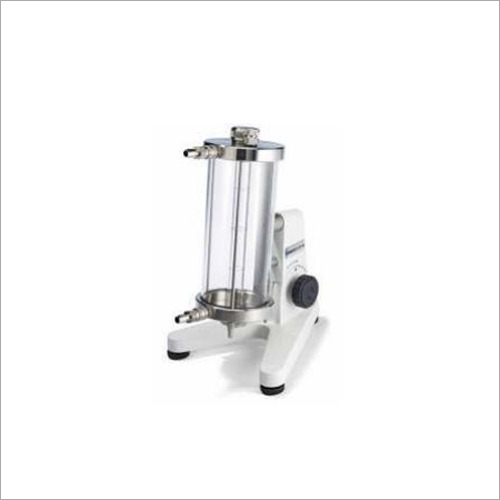
Tell us about your requirement

Price:
Quantity
Select Unit
- 50
- 100
- 200
- 250
- 500
- 1000+
Additional detail
Mobile number
Email

More Products in Testing Instruments Category
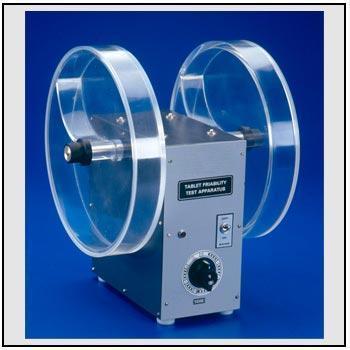
DIGITAL FRIABILITY TEST APPARATUS
Minimum Order Quantity : 1 Piece
Usage : Pharmaceutical Laboratory Testing
Application : Tablet/Capsule Friability Testing
Power Supply : 230V 10% AC, 50 Hz
Features : Programmable Timer, Automatic drum stop, Audible alarm on test completion
Humidity : Ambient or as per test condition
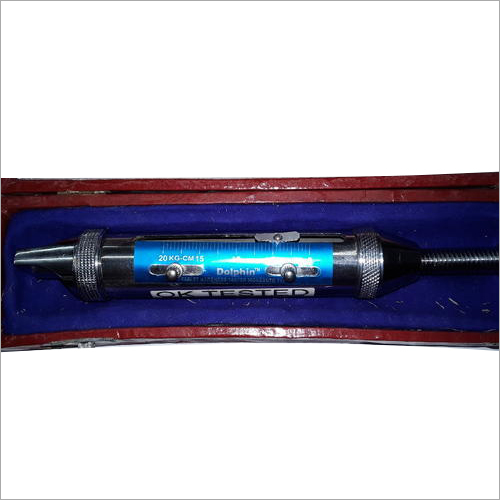
Tablet Hardness Tester
Usage : Pharmaceutical Laboratory Testing
Application : To test tablet crushing strength (hardness)
Power Supply : 230 V AC, 50 Hz
Features : LED display, accurate measurement, robust body
Humidity : 20% 80% RH
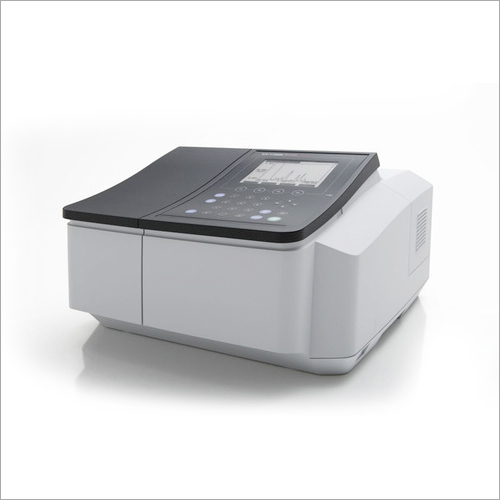
Spectrophotometer
Usage : Spectral analysis of liquid samples
Application : Qualitative & Quantitative analysis in chemical, clinical, pharmaceutical, environmental, biochemical applications
Power Supply : 220 V AC, 50 Hz
Features : Automatic wavelength setting, wide spectral range, user calibration, data storage, easy maintenance
Humidity : 80% RH (noncondensing)
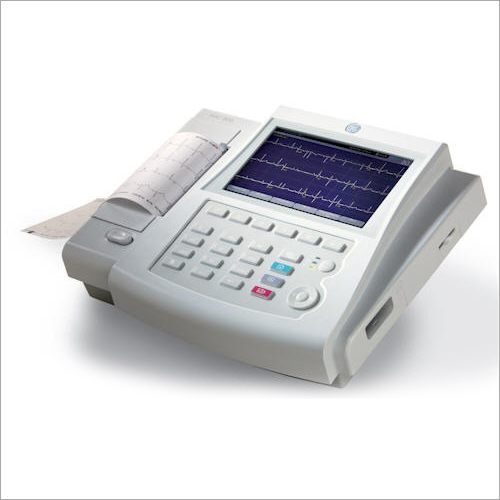
E.C.G. Machine
Usage : Hospital, Clinic, Diagnostic Center
Application : Cardiac diagnostic / Patient monitoring
Power Supply : 220V / 50Hz AC or builtin rechargeable battery
Features : Thermal printer, Digital filters, Leadoff detection, Rechargeable battery
Humidity : 80% RH

 Send Inquiry
Our Products


No-13, Post Office Lane, J.B.F. House, Ground Floor, Kalbadevi Road,Mumbai - 400002, Maharashtra, India

Mr Dharmesh
(CEO)
Mobile :07971258189
 Send Inquiry
 Send SMS
 Call Me Free
Developed and Managed by Infocom Network Private Limited.
